

The Moment
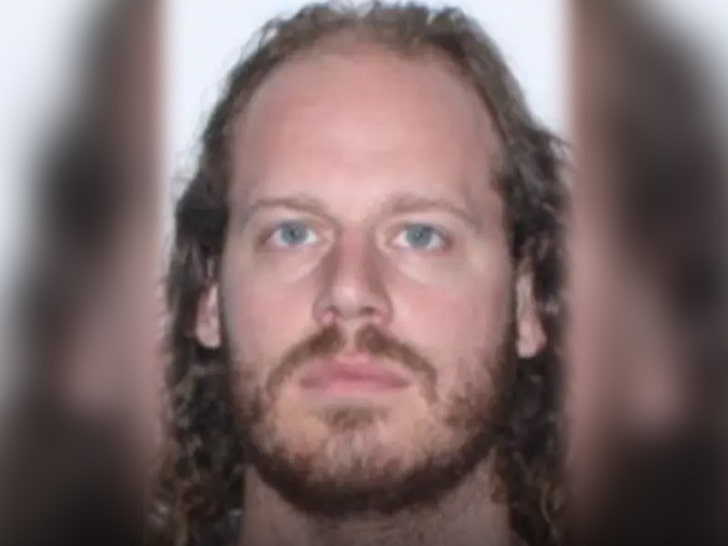
From the halfpipe to a top spot on the FBI’s Ten Most Wanted list – that is not the career pivot anyone had in mind for Ryan Wedding.
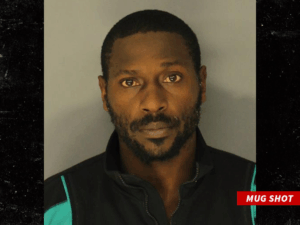
Wedding, a Canadian Olympic snowboarder who competed in the 2002 Winter Games, has been arrested in Mexico after more than a year on the run, according to statements summarized by U.S. officials on January 23, 2026.
FBI Director Kash Patel said late Thursday that Wedding was taken into custody in Mexico and will be transported to the United States to face charges. On X, Patel called it “a huge day for a safer North America, and the world,” and framed the arrest as a message to those who “harm our citizens.”
U.S. authorities accuse Wedding of being an alleged international drug kingpin. He is alleged to have overseen a criminal enterprise that shipped more than 130,000 pounds of cocaine a year, and to have ordered multiple murders – including, prosecutors say, the killing of a witness who was set to testify against him.
He reportedly became such a priority that he was added to the FBI’s Ten Most Wanted list in March of last year, with a reward of up to $15 million for information leading to his capture. The FBI says he also went by several aliases: “El Jefe,” “Giant,” “Public Enemy,” and “James Conrad King.”
One of his top alleged associates, Andrew Clark, was arrested in Mexico in 2024 and handed over to U.S. authorities last year. Officials say more details on Wedding’s case will be shared at a scheduled news conference later Friday.
.@FBIDirectorKash will hold a news conference at 11am to announce the arrest of Olympic snowboarder-turned-alleged-drug-kingpin Ryan Wedding… pic.twitter.com/FsvMZh5Rxw
— John Roberts (@johnrobertsFox) January 23, 2026
The Take
I know athletes reinvent themselves after retirement, but “Olympian turned alleged cartel boss” sounds like a rejected Netflix logline – and yet, here we are.
The wedding’s story hits a very particular kind of cultural nerve. We love a comeback story: the underdog who falls, learns, and redeems themselves. This isn’t that. This is the darker cousin – the one where someone steps out of the Olympic village and allegedly walks straight into a crime saga.
Think about it: you watch a guy in 2002 hurtling down a snowy mountain, finishing 24th in men’s parallel giant slalom, and two decades later his name is being said in the same breath as “multiple murders” and “130,000 pounds of cocaine a year.” It’s like finding out your old high school lifeguard now allegedly captains a pirate ship.
There’s also something uniquely modern about how this is playing out. The FBI Director is doing victory laps on X. Fans are probably Googling old Olympic clips, wondering if there were any “signs.” True crime obsessives are already mentally storyboarding an eight-episode docuseries called something like White Powder or The Giant.
But beneath the spectacle, the alleged crimes are deadly serious. We’re talking about an operation that, if proven, would mean massive amounts of drugs on the streets and real people harmed or killed – not just a fallen sports hero headline for us to gasp over.
For me, the real cultural question is this: why are we still so shocked when an athlete’s public image doesn’t match their private life? We’ve seen steroid scandals, domestic violence cases, gambling rings – and yet every time, we react like it’s the first time someone in peak physical condition might also make catastrophically bad, even criminal, choices.
Wedding’s arrest feels less like an “I can’t believe it” twist and more like a reminder: the Olympic logo doesn’t come with a background check halo. Fame is a microphone, not a moral certificate.
Receipts
Confirmed:
- Ryan Wedding, a Canadian snowboarder, competed in the 2002 Winter Olympics and finished 24th in the men’s parallel giant slalom, according to official Olympic records.
- The FBI publicly listed Ryan James Wedding on its Ten Most Wanted list in 2025, describing him as approximately 6-foot-3, 240 pounds, and noting aliases including “El Jefe,” “Giant,” “Public Enemy,” and “James Conrad King,” per the FBI’s wanted notice.
- FBI Director Kash Patel stated that Wedding was arrested in Mexico late Thursday and will be transported to the United States, and posted on X calling it “a huge day for a safer North America,” on January 23, 2026.
- U.S. authorities have offered a reward of up to $15 million for information leading to Wedding’s capture, as listed in the FBI’s Ten Most Wanted materials.
- Andrew Clark, identified by U.S. authorities as an alleged associate of Wedding, was arrested in Mexico in 2024 and transferred to U.S. custody in 2025, according to law-enforcement statements.
Unverified / Alleged (Not Proven in Court):
- That Wedding led or directed an international criminal enterprise responsible for shipping more than 130,000 pounds of cocaine per year.
- That he ordered multiple murders, including the killing of a witness who was reportedly set to testify against him.
- That he functioned as an international “drug kingpin” at the top of a large narcotics network.
All of those serious accusations remain allegations until and unless they are proven in court. Wedding is entitled to the presumption of innocence.
Backstory (For Casual Readers)
If the name Ryan Wedding rings the faintest bell, you probably watched the 2002 Winter Olympics. He was one of those mid-pack athletes you clock once and never think about again – a Canadian snowboarder racing in the parallel giant slalom, far from the national poster-child level of fame.
In the years since, Wedding appears to have moved far from that wholesome Olympic image. According to U.S. law-enforcement documents, he eventually became the target of a major federal investigation into alleged large-scale cocaine trafficking and related violence. By 2025, he’d earned a slot on the FBI’s Ten Most Wanted list – a place usually reserved for terrorism suspects, serial killers, and alleged cartel leaders.
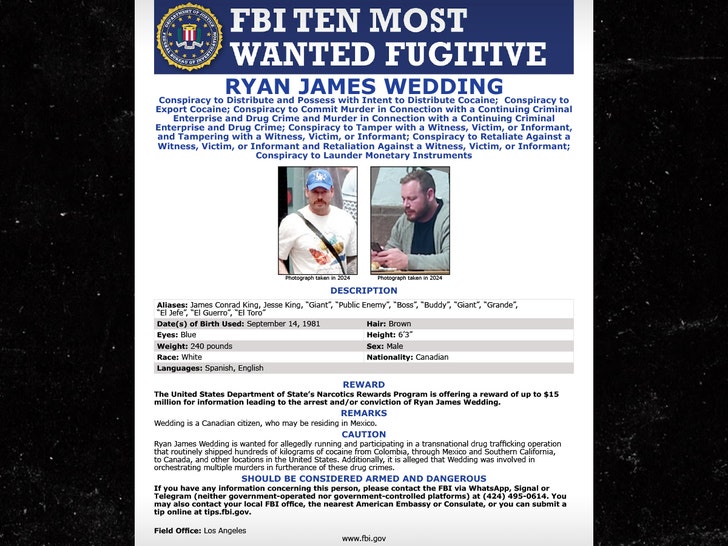
Authorities say he went on the run for more than a year, during which time they publicized his physical description, his aliases, and a multimillion-dollar reward. Now, after his reported arrest in Mexico, that long manhunt phase seems to be over.
What’s Next
In the immediate term, all eyes are on the expected news conference from U.S. officials, who have promised to release more details about the arrest and the case. We’ll likely get clarity on which specific federal charges he’ll face, and whether more alleged co-conspirators are on the radar.
From there, the usual high-profile playbook kicks in: extradition or transfer to U.S. soil (if not already underway), an initial court appearance, and a long legal process. Expect arguments over detention, security, evidence, and where the trial might even be held – especially if prosecutors are framing this as a major transnational drug case.
On the culture side, brace yourself for think pieces, deep-dive podcasts, and at least one future streaming-doc pitch deck. True crime and sports nostalgia are two of America’s favorite genres; this case sits squarely at their intersection.
The challenge, for all of us watching, will be keeping a clear line between the real human stakes – the people allegedly harmed by this operation – and the flashy “fallen Olympian” angle that’s the easiest to market.
Your turn: When you hear that an Olympian is accused of running a violent drug empire, does it genuinely shock you – or have we seen enough athlete scandals that nothing about fame and crime surprises you anymore?
Sources
- FBI Ten Most Wanted Fugitive materials for Ryan James Wedding (accessed January 23, 2026).
- Public statements and X post by FBI Director Kash Patel, January 23, 2026.
- Olympic Games historical results for the 2002 Winter Olympics men’s parallel giant slalom (accessed January 23, 2026).
- Law-enforcement and entertainment news summaries describing Wedding’s arrest in Mexico and alleged criminal conduct, January 23, 2026.





































Comments