


The Washington great is gone at 91, and with him goes a whole style of quarterbacking – and celebrity – that belonged to a looser, less-managed NFL.
Sonny Jurgensen didn’t just play quarterback; he played it like he’d been born with a cigar in one hand and a playbook in the other.
Now, according to a statement from his family shared via the Washington Commanders on Friday, the Hall of Famer has died at 91, and an entire generation of fans just lost a piece of their football childhood.
This isn’t just about stats; it’s about the end of a certain kind of sports charisma you can’t manufacture with a social media team.
The Moment
On Friday morning, team officials for the Washington Commanders said they were informed that Sonny Jurgensen had passed away at the age of 91. No cause of death was disclosed.
His family released a written statement remembering him not just as a Hall of Fame arm, but as the “steady, humorous, and deeply loving heart” of their family, and inviting fans to raise a glass and share stories as they watch games this weekend.
Team owner Josh Harris – himself a lifelong fan of the franchise – called Jurgensen “one of the defining legends of Washington football” and the embodiment of what it meant to wear burgundy and gold: tough, smart, and devoted to the city and its fans.
The Take
For anyone who grew up with Sonny Jurgensen on their TV – or their radio – this one hits like a blindside sack.
He wasn’t a perfectly curated brand; he was a quarterback who threw daring deep balls, racked up yardage, and then stuck around for decades as a broadcaster, the unofficial voice of Washington football Sundays.
In today’s NFL, quarterbacks are polished from high school, media-trained by college, and rolled out like luxury SUVs. Jurgensen was from a different factory. He played 18 seasons, made five Pro Bowls, and still somehow felt like a neighborhood guy you might bump into at a bar, happy to tell you exactly what he thought of the team’s play-calling.
He was the rare sports star who felt larger than life and somehow still like one of us.
That’s part of why his death lands as more than a sports headline. It’s a reminder that a huge part of American life – gathering around grainy TVs, listening to scratchy radios, arguing about whether Sonny or someone else was the real “guy” – is firmly in the rearview mirror.
There’s a reason his family’s statement leans so heavily into storytelling: they know his legacy now lives in memories more than highlight reels. Yes, he’s in Canton. Yes, he’s the only Washington player to ever wear No. 9 in a game. But the real monument is the generation of fans who can still describe, in detail, where they were when he launched one of those bombs downfield.
In an era when teams change names, owners, and stadiums, Jurgensen was a rare constant. His passing underscores how much the franchise has been trying to rebuild not just a roster, but a sense of identity. You don’t replace a Sonny Jurgensen; you just hope the next era earns even half the affection his did.
Receipts
Confirmed:
- Sonny Jurgensen’s death at age 91 was announced Friday by the Washington Commanders, who said they were informed of his passing that morning; his family’s statement was shared through the team.
- He played 18 seasons in the NFL as a quarterback, was selected to five Pro Bowls, and was named an All-Pro in 1961, according to long-standing league and Hall of Fame records.
- Jurgensen was inducted into the Pro Football Hall of Fame in 1983.
- He is recognized as the only Washington player to wear the No. 9 jersey in a game, per the franchise’s own historical records.
Unconfirmed/Not Publicly Disclosed:
- Cause of death has not been disclosed by the family or the team as of the reporting referenced here.
Backstory (For the Casual Reader)
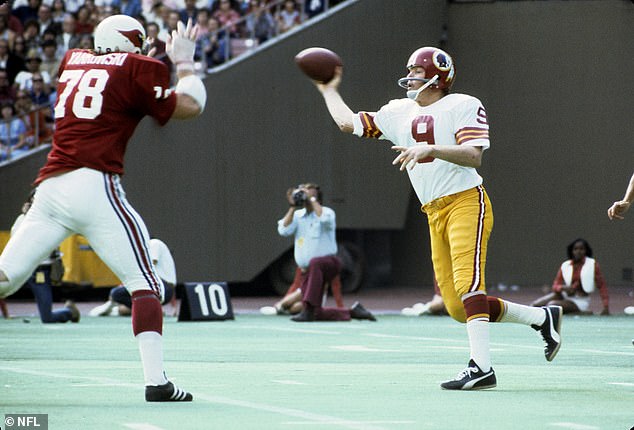
If you know the name but not the full story, here’s the quick version.
Sonny Jurgensen came into the league in the 1950s, became one of the most gifted pure passers of his era, and spent the heart of his career starring in Washington after an early stint in Philadelphia. He piled up numbers in an age when passing wasn’t nearly as easy or protected as it is now, which is part of why his peers and historians still talk about his “golden arm” with a little awe.
After his playing days, he didn’t just disappear. He slid into the broadcast booth, where his mix of football IQ and dry humor made him a Sunday staple for Washington fans and a kind of unofficial historian for the franchise’s ups and downs.
For fans over 40, that’s the Sonny they often remember most vividly: the voice explaining what just went wrong (or right) on the field, delivered with the authority of someone who’d taken those hits himself.
So when his family asks fans to celebrate his life by raising a glass and sharing stories, they’re not being poetic – they’re describing how most people experienced him in the first place: through shared rituals, shared games, and shared arguments about the team he never stopped loving.
Your turn: When you think of Sonny Jurgensen, do you picture the quarterback on the field, the voice in the booth, or simply a symbol of a very different era of NFL Sundays?
Sources: Statements from Sonny Jurgensen’s family and the Washington Commanders released Feb. 6, 2026; historical player and Hall of Fame records available prior to 2024.













































































Comments