

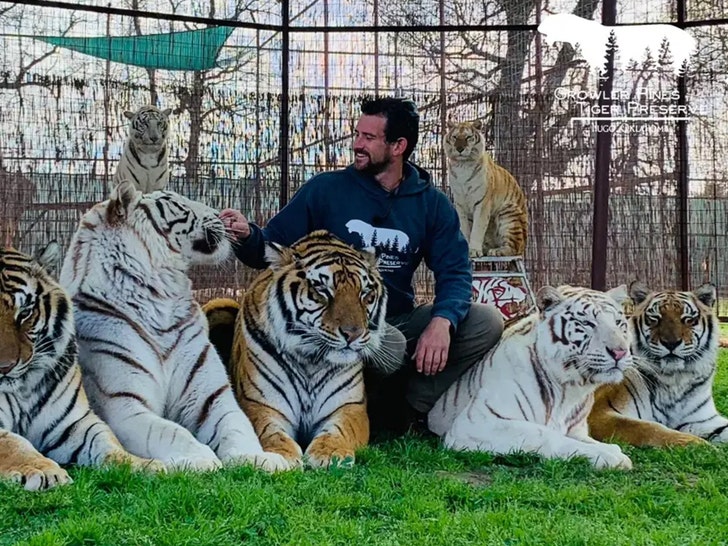
The Moment
The world around “Tiger King” just got even darker.
New details have surfaced about the death of animal trainer Ryan Easley, who was attacked by a tiger during a show at the Growler Pines Tiger Preserve in Hugo, Oklahoma, back on September 20. A recent report citing the Tulsa Medical Examiner says Easley died from a mix of blunt force, sharp force, and crushing injuries caused by the mauling.
According to that report, a tiger allegedly grabbed Easley by the neck and shoulder, sank its teeth in, and shook him violently during a performance. Paramedics and deputies responded, but Easley was pronounced dead shortly afterward. He was just 37.
Growler Pines later posted a statement on Facebook calling the tragedy a “painful reminder of both the beauty and unpredictability of the natural world.” It’s the kind of line that sounds poetic until you remember a real person died doing a show people paid to see.
The Take
I think a lot of us assumed the “Tiger King” era fizzled out when we turned off Netflix and went back to the office. Clearly, the danger didn’t log off with us.
Easley wasn’t some random thrill-seeker sneaking into an enclosure for a selfie. By all accounts, he grew up around animals, apprenticed with a tiger trainer in his early 20s, and built a career on ShowMe Tigers, his traveling act. When the pandemic shut everything down, he opened Growler Pines instead of hitting the road.
In other words: this was his life’s work. And it still killed him.
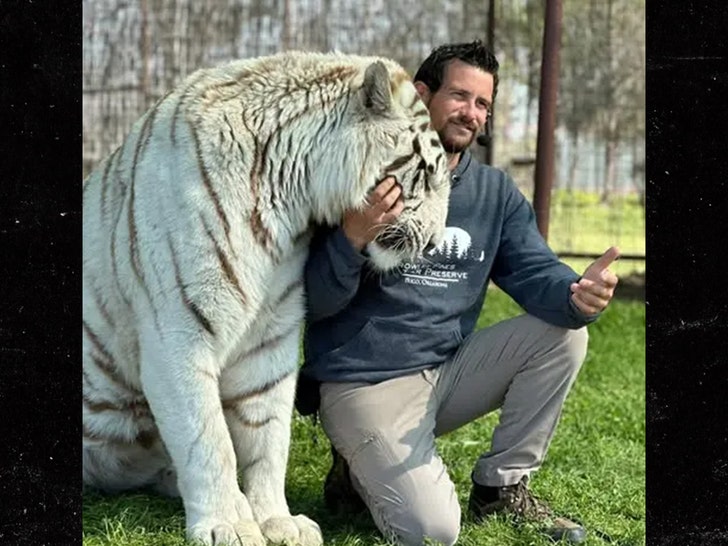
We love to pretend there’s a safe version of wild. Put it in a sparkly costume, add a ringmaster, maybe a reality series, and suddenly a 400-pound apex predator is “part of the show.” But a tiger is not a golden retriever in stripes. It’s more like having a loaded cannon as a roommate and saying, “It’s fine, he’s never gone off before.”
The statement from Growler Pines about “beauty and unpredictability” is true, but it’s also doing quiet PR. It leaves out the harder question: Should we still be running tiger shows at all? After everything we learned from “Tiger King,” the animal abuse scandals, and the crackdowns on big-cat ownership, why are people still sitting in bleachers watching tigers do tricks?
The Easley story sits right at that messy intersection of personal passion, public entertainment, and predator reality. It’s not a cartoon villain moment. It’s something harsher: a reminder that even experts with years of experience can’t fully control an animal built by nature to hunt, crush, and bite.
And for the rest of us? We don’t get to be shocked every time this happens while still buying tickets, clicking the videos, and treating big-cat acts like a slightly edgy family outing. You can’t have the thrill without the risk – and sometimes that risk is a real person dying in front of a crowd.
Receipts
Confirmed (based on official statements and widely reported records):
Cause of Death Revealed for Man Who Worked with “Tiger King” Star Joe Exotic and Was Killed in Tiger Attack
Ryan Easley died of blunt force, sharp force and crushing injuries due to tiger mauling, the Chief Medical Examiner in Tulsa, Okla., said in an autopsy obtained by PEOPLE… pic.twitter.com/WVCfjscn6D
— Majestic Glow (@majesticglow) December 12, 2025
\n\n\n
- Ryan Easley, 37, died after being mauled by a tiger during a show at Growler Pines Tiger Preserve in Hugo, Oklahoma, on September 20, 2025, according to a widely circulated entertainment news report citing local authorities.
- The same report cites the Tulsa Medical Examiner as listing Easley’s cause of death as a combination of blunt force, sharp force, and crushing injuries due to tiger mauling.
- First responders, including paramedics and deputies, arrived on scene, but Easley was pronounced dead shortly after the attack.
- Growler Pines Tiger Preserve shared a statement on its official Facebook page after Easley’s death, calling the incident a “painful reminder of both the beauty and unpredictability of the natural world.”
- Easley had a longtime career working with big cats, starting with an apprenticeship under a tiger trainer in his early 20s, later running a traveling act called ShowMe Tigers, and eventually opening Growler Pines during the COVID-19 pandemic.
Unverified / Reported but not independently confirmed here:
- Specifics of the “long list” of individual injuries Easley reportedly suffered in the attack, beyond the general description provided via medical examiner findings.
- Any internal safety protocols, prior incidents, or regulatory history at Growler Pines, which have not been made public in detail.
Sources (human-readable): widely circulated entertainment news report on Ryan Easley’s death and medical examiner findings (December 11-12, 2025); Growler Pines Tiger Preserve official Facebook statement following the incident (late September 2025); background from Netflix’s “Tiger King” documentary series (2020) and public coverage of big-cat exhibition culture.
Backstory (For Casual Readers)
If you somehow dodged the early-pandemic craze, “Tiger King” was the wild Netflix docuseries that introduced viewers to Joe Exotic, the mullet-wearing, gun-toting, big-cat park owner from Oklahoma, along with a whole orbit of trainers, keepers, and rivals. It turned America’s quiet fascination with private zoos and exotic cats into a full-blown obsession – part true crime, part circus, part soap opera.
In the years since, there have been legal battles, animal welfare crackdowns, and new laws like the Big Cat Public Safety Act in the U.S., which aims to phase out private ownership of dangerous big cats and bans public cub-petting. But smaller shows and preserves tied to that world still exist, especially in states with deep roots in rodeos, circuses, and traveling acts. Easley was one of the performers who lived inside that culture rather than on camera, building his career around trained tiger acts instead of streaming fame.
What’s Next
For now, the biggest new development is the medical examiner’s findings spelling out how Easley died. Any additional official follow-up – whether from workplace safety regulators, animal welfare authorities, or local law enforcement – would likely surface in the coming months if it’s made public at all.
What is more certain is the cultural fallout. Each time a trainer is seriously hurt or killed, pressure grows on lawmakers and the public to ask whether big-cat performances still belong in modern entertainment. Recent laws have already squeezed private ownership and public handling of tigers and other large predators; cases like Easley’s only add weight to those arguments.
On a more personal level, there are the people closest to him: family, colleagues, and the staff at Growler Pines. Many of them have spent their lives insisting that these animals can be worked with safely if you respect them and follow the rules. Now they’re facing the hardest proof that, sometimes, that simply isn’t enough.
So the real next chapter isn’t just “Will the show go on?” It’s whether audiences – especially those of us who watched “Tiger King” like it was a wild cartoon – are finally ready to say: maybe we don’t need live tigers jumping through hoops for our entertainment anymore.
What do you think – is there any version of big-cat shows that feels acceptable now, or has this era quietly passed without us admitting it?












































































Comments