

The Moment
The Kennedy Center is supposed to be where politics takes a seat, the arts take the stage, and everyone pretends to behave for at least one black-tie evening. Instead, this Christmas Eve, it turned into a branding battlefield.
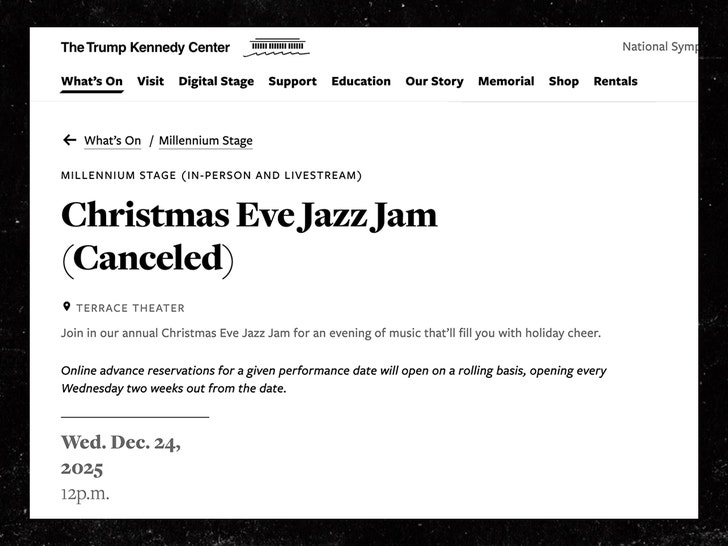
According to a new report, President Donald Trump’s name has been added to the famed John F. Kennedy Center for the Performing Arts, with the venue now being referred to as the Trump-Kennedy Center. In response, veteran jazz musician and bandleader Chuck Redd canceled his long-running Christmas Eve jazz concert in protest.
Redd, who has hosted holiday jazz shows at the center since 2006, says he pulled the plug after seeing the updated name first online and then reportedly on the building itself. He described himself as both angry and saddened, especially given his decades-long relationship with the venue.
Trump, for his part, has been quoted telling reporters he was “surprised” and “honored” that the center’s board decided to add his name.

So: one historic arts institution, two presidents in the title, and now a jazz tradition canceled on Christmas Eve. Because of course that’s where we’ve landed in 2025.
The Take
I’ll be honest: the idea of the Trump-Kennedy Center sounds less like a real building and more like the setup to a late-night monologue. It’s the political equivalent of mixing champagne and orange juice – sure, you can, but should you?
Here’s what’s really going on underneath the noise: this isn’t just about a nameplate on a wall. It’s about who gets to own American culture – the memory of a slain president who championed the arts, or a modern president whose name is already on everything from skyscrapers to steaks.
The Kennedy Center isn’t a random auditorium. It was named for John F. Kennedy as an official memorial, written into law after his assassination. For many performers, especially those who came up in the ’70s and ’80s, that name is sacred ground. You don’t just slap a second president’s name onto it without kicking up some serious feelings.
Chuck Redd’s cancellation is one of those small, symbolic acts that tells you where the cultural tectonic plates are shifting. One guy canceling a Christmas Eve gig won’t topple an institution, but it does send a message: if you turn a memorial into a billboard, don’t be shocked when the artists start walking.
Trump saying he was “surprised” and “honored” is its own little Rorschach test. If you like him, it sounds gracious. If you don’t, it sounds like exactly what he’s always wanted: another marquee, another building, another line in bold letters. Either way, the headline isn’t just about Trump – it’s about how far we’re willing to go in turning national monuments into personal brand extensions.
The analogy that keeps popping into my head? Imagine waking up to find your late mother’s headstone suddenly reads: In Loving Memory of Mom – Brought to You by Your New Stepfather. Technically you still recognize it, but it feels… wrong. That’s the emotional math a lot of people are doing with this renaming.
Receipts
Here’s what we can separate out so far.
Confirmed:
- Chuck Redd, a jazz drummer and vibraphonist who has performed at the Kennedy Center for decades, says he canceled his Christmas Eve concert after seeing the venue referred to as the “Trump-Kennedy Center,” first on its website and then reportedly on the building.
- Redd has publicly described himself as upset and saddened by the change, citing his long history with the venue and the emotional weight of the Kennedy name.
- Redd has hosted holiday “Jazz Jams” at the center since around 2006 and has a long resume performing with major jazz names such as Dizzy Gillespie and Ray Brown.
- After President John F. Kennedy’s assassination in 1963, Congress passed a law designating the performing arts center as a living memorial in his name. The “John F. Kennedy Center for the Performing Arts” is written into federal law.
- Trump has told reporters he was “surprised” and “honored” that the board chose to add his name to the center.
Annual Christmas Eve jazz concert at the Trump-Kennedy Center is CANCELLED
That is due to the protest of the show host regarding Center rebranding
‘I was saddened to see this name change’ — he told NBC pic.twitter.com/mAX0Ku0XO1
— RT (@RT_com) December 25, 2025
Unverified / Open Questions:
- Whether the legal name of the institution has been formally changed under federal law, or if this is a branding or signage decision by the board.
- How exactly the board voted, who proposed the change, and whether there was outside political pressure or donor influence.
- Whether the new name will be permanent, time-limited, or potentially challenged by lawmakers, donors, or the public.
Backstory (For Casual Readers)
If you haven’t thought hard about the Kennedy Center since the Bush administration, here’s the quick refresher. The John F. Kennedy Center for the Performing Arts, on the banks of the Potomac in Washington, D.C., opened in 1971 as the nation’s official living memorial to President Kennedy. Congress wrote his name into the center’s very identity, tying together politics, culture, and remembrance in one marble-and-glass package.
Over the years, the Kennedy Center Honors became a major pop-culture moment – the place where presidents, celebrities, and the arts elite all sat under the same gold ceiling pretending not to notice who did or didn’t stand for whom. Within that world, Chuck Redd has been a steady holiday presence, leading jazz performances every Christmas season since the mid-2000s.
Trump, meanwhile, has long treated his name as a luxury logo, attaching it to hotels, golf courses, buildings, and more. Putting that brand energy onto a presidential memorial is exactly the kind of move that was always going to hit some people like nails on a chalkboard.
What’s Next
The big question now is whether Chuck Redd’s protest is a one-off or the start of a broader quiet rebellion inside the arts world.
Here’s what to watch for in the coming weeks and months:
- More artists speaking up (or stepping away): If additional performers cancel shows, make statements, or quietly shift their events elsewhere, that’s a sign the name change isn’t landing well behind the scenes.
- A formal word from the Kennedy Center’s leadership: A detailed statement from the board or the center’s top executives about why they added Trump’s name – and whether any public input or federal sign-off was involved – would answer a lot of questions.
- Lawmakers weighing in: Because the Kennedy Center’s identity is written into federal law, any push to restore or protect the original name could show up as proposed legislation or pointed public comments.
- Donor and audience reaction: If longtime supporters or ticket buyers start complaining, pulling support, or, conversely, cheering the move, you’ll see that reflected in fundraising campaigns, public letters, and future programming choices.
For now, one thing is crystal clear: the fight over whose name is on the building says a lot about who we think American culture belongs to – and who we’re willing to let co-sign our national memories.
I’m curious: do you see this name change as a natural evolution of a living institution, or does adding Trump’s name to the Kennedy Center cross a line that should stay untouched?
Sources
Information in this piece is based on: (1) the original reported account describing Chuck Redd’s cancellation and his quoted reactions (December 2025); and (2) publicly available historical records about the John F. Kennedy Center for the Performing Arts, including its designation by Congress as a living memorial to President Kennedy in the 1960s.



Comments