

The Moment
Somehow, in the middle of two of the darkest celebrity stories of our lifetime, we’ve ended up talking about the shape of a man’s private parts.
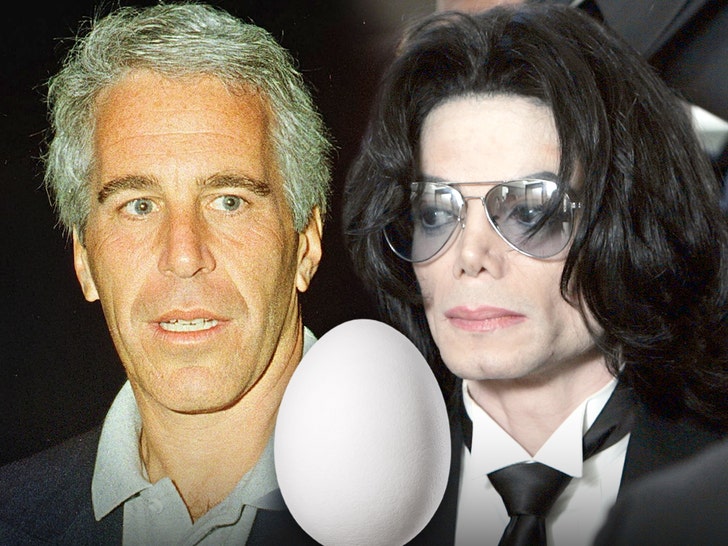
According to a new interview with attorney Spencer Kuvin, the infamous Jeffrey Epstein deposition question about his allegedly “egg-shaped” genitalia didn’t come out of nowhere. Kuvin says he borrowed the idea from Michael Jackson’s child molestation case, using courtroom strategy straight from one nightmare celebrity saga and dropping it into another.
Here’s the short version: in a 2009 civil deposition tied to Epstein’s underage accusers, Kuvin asked Epstein whether his anatomy had a distinctive, oval shape. Kuvin tells TMZ this week that he was inspired by the 2005 Jackson criminal trial, where prosecutors sought to use intimate photographs of Jackson’s skin discoloration – linked to vitiligo – so that an accuser could identify him.
Kuvin says his plan was similar: get a court-approved medical exam of Epstein and compare it to a victim’s description, hoping to prove she’d seen him exposed. Epstein allegedly stormed out of the first deposition after the question, was forced back for a second, and then pleaded the Fifth repeatedly when grilled about sex toys and other details found in his home.
This is all resurfacing now because Epstein, who died in federal custody in 2019 while awaiting trial on sex trafficking charges, is once again back in the headlines. Recently released emails and a new bill passed by Congress demanding the Justice Department release more “Epstein Files” have the public combing through every ugly detail of how he operated – and how the system handled him.
The Take
I don’t know what’s more depressing: that a lawyer had to ask about an “egg-shaped” anything to try to prove abuse, or that the world instantly latched onto that phrase like it was a meme instead of evidence.
But this is exactly how high-profile abuse cases so often play out. The alleged victims tell stories of grooming, power, fear – and what sticks in the public imagination? A bizarre anatomical question, a skin discoloration, a humiliating photo session. The most private details become the most public, and the truth of the behavior gets buried under the trivia of the body.
Think about the Jackson trial. For many people, the lasting pop-culture memory isn’t the actual testimony; it’s the talk-show chatter about whether an accuser could identify Jackson’s intimate areas because of vitiligo. That’s the part that felt scandalous, so that’s the part that stuck. Now, decades later, a lawyer says he consciously tried to rerun that playbook on Epstein.
It’s like our justice system, especially around famous men, has quietly decided: If it’s not graphic, it’s not persuasive. Instead of focusing on patterns of behavior, power imbalances, travel records, or money trails, we end up zoomed all the way in on anatomy, photographs, and the most humiliating evidence possible.
And look at what happened here. Kuvin says he never actually got to file the motion for a medical exam; Epstein settled the case before it went that far. That’s a pattern with powerful defendants: keep things sealed, settle when the questions get too close, and make sure the public conversation circles around the weirdest detail instead of the full story.
Do I believe lawyers should use every legal tool available to prove abuse, especially when minors are involved? Absolutely. If forensic details help confirm a victim’s account, that’s evidence, not gossip. But the way the culture chews these details up is another story.
We turn life-altering accusations into late-night punchlines. We remember the phrase “egg-shaped” more than we remember the accusers’ names. It’s courtroom trauma turned into tabloid trivia – and now, thanks to this revelation, it’s literally being recycled from one celebrity case to another like a script.
If anything, Kuvin’s admission is a reminder that when the accused is rich and famous, the bar for being believed can feel impossibly high. You don’t just need testimony. You don’t just need patterns. You need a stranger to describe your most private features down to the millimeter. Only then, maybe, does the system start to take notice.
That’s not justice. That’s a circus where the ticket price is someone’s dignity.
Receipts
Confirmed:
The attorney who asked Jeffrey Epstein in a deposition if he had an ‘egg-shaped penis’ tells us he was taking a cue from a famous Michael Jackson trial.
Details: https://t.co/rBjLRraNqC pic.twitter.com/JgIfTPXTAm
— TMZ (@TMZ) November 19, 2025
- Spencer Kuvin, an attorney who represented Epstein accusers, has publicly said he asked about Epstein’s allegedly “egg-shaped” genitalia in a 2009 civil deposition and that Epstein left the first session after that question, then was ordered back and invoked the Fifth repeatedly. Kuvin described this in an on-record interview published November 19, 2025.
- According to unsealed court transcripts from Epstein-related civil cases in Florida, Epstein did invoke the Fifth Amendment extensively during questioning in 2009 depositions.
- In the 1993-1994 investigation and the later 2005 criminal trial involving Michael Jackson in California, investigators documented vitiligo-related skin discoloration and sought to use intimate photographs as potential identifying evidence, as reflected in court records and contemporaneous legal reporting from that period.
- Jeffrey Epstein was facing federal sex trafficking charges when he died in a federal detention center in 2019; his death was officially ruled a suicide according to the medical examiner.
- Members of Congress have recently advanced legislation urging or requiring the Department of Justice to release additional records related to Epstein’s activities and associates, widely referred to in coverage as the “Epstein files,” in 2025.
Unverified or Framed as Allegations:
- Descriptions of Epstein’s anatomy come from alleged victims and attorneys; there has been no publicly released, court-confirmed medical report matching those descriptions.
- Any allegation that Epstein exposed himself or used specific items in the presence of underage girls remains an allegation unless specifically established in court; Epstein died before a full federal trial on the trafficking charges.
- Past accusations against Michael Jackson involving minors remain deeply disputed; he denied wrongdoing and was acquitted in the 2005 criminal trial.
Sources: Attorney Spencer Kuvin’s on-record comments published November 19, 2025; unsealed Epstein civil deposition transcripts filed in federal court and released in 2019; publicly available records and testimony from the 1993-1994 Michael Jackson investigations and the 2005 criminal trial; recent 2025 congressional statements and bill text regarding the release of Epstein-related documents.
Backstory (For Casual Readers)
If you’ve tried to tune this all out for the sake of your sanity, here’s the quick refresher. Jeffrey Epstein was a wealthy financier with powerful connections, arrested in 2019 on federal sex trafficking charges involving underage girls. He previously faced a controversial non-prosecution deal in Florida in the mid-2000s after state and federal investigations into similar conduct. He died in a federal jail in 2019, and his death was ruled a suicide.
Michael Jackson, the pop icon, faced separate child molestation allegations in the 1990s and then again in the early 2000s. In 1993, he settled a civil case without admitting wrongdoing. In 2005, he was tried on criminal charges in California and was acquitted on all counts. Throughout, Jackson and his legal team insisted he was innocent. The investigations into him involved unusually intrusive evidence-gathering, including photographs meant to document his vitiligo and other physical characteristics for possible identification by accusers.
Now, decades later, a lawyer from the Epstein cases is openly saying the Jackson trial influenced his approach – which is how we ended up with that shocking deposition question becoming a headline in 2025.
What’s Next
So where does this all go from here?
Legally, the more interesting story isn’t whether a lawyer asked a bizarre question in 2009 – it’s what happens with the push to release more Epstein records now. If the Justice Department complies with new pressure from Congress, we could see more names, more travel logs, and more details about who knew what, and when.
For survivors and their advocates, the hope is that transparency finally replaces rumor. More documents could give a fuller picture of how Epstein was able to operate for so long, and how many people in power looked the other way. It might also clarify which allegations are supported by hard evidence and which are not.
Culturally, though, we have a choice to make. Are we going to keep treating the most graphic, humiliating details as entertainment? Or can we sit with the discomfort long enough to see these facts as exactly what they are: tools to prove or disprove serious claims, not punchlines.
As new “Epstein files” and old trial tactics resurface, it might be time to retire the shock-value one-liners and start paying attention to the systems that made any of this possible in the first place.
Your turn: When lawyers use graphic or deeply personal details to try to prove abuse in celebrity cases, do you think it helps survivors get justice – or mostly feeds the spectacle?












Comments